Ideal Candidate Traits for Invisalign Therapy
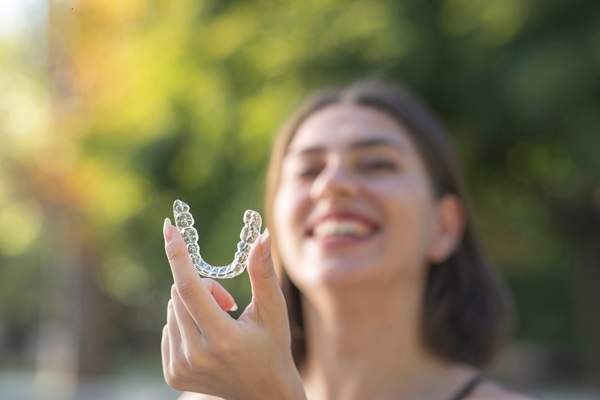
One of the most common orthodontic treatments that a general dentist offers is Invisalign®. This popular way to straighten crooked or crowded teeth offers individuals flexibility and ease while undergoing a discreet method of treatment. With Invisalign®, there are a lot of things to know, as it is a newer orthodontic treatment with a totally different technology than that of traditional braces. Continue reading to find out more about the specifics.
Invisalign®: an orthodontic therapy from a general dentist
Below is an overview of Invisalign®, including who is an ideal candidate and what some of the pros and cons are. This information may be helpful to individuals who are considering different orthodontic treatment options.
The ideal candidate
When it comes to Invisalign®, not everyone is an ideal candidate. Unlike traditional approaches, clear aligners rely on a specific technology that targets certain types of dental problems.
Outlined below are some of the things that a general dentist takes into consideration when performing an orthodontic evaluation on someone who is considering Invisalign®.
- The crowding or crookedness of the teeth has to be considered minor to moderate. Severe cases will require additional orthodontic treatment such as braces, headgear, or a combination of multiple treatments
- Bite corrections can rarely be treated with Invisalign®. Over and underbites are the most common types of abnormalities when it comes to orthodontic treatment. Unfortunately, aligners target the position of each tooth in the upper or lower arch, as opposed to the position of the jaw and teeth as an entire arch.
- Typically, the patient requiring orthodontic treatment must be 16 years of age or older in order to qualify for Invisalign®. Individuals under the age of 16 tend to be less disciplined, which makes clear aligner treatment more difficult to maintain. Additionally, 16 is around the age when most individuals' bone density has fully developed.
- If the patient is underage, a parent's consent must be provided
- The patient must be able to be disciplined enough to wear Invisalign® for at least 22 hours a day; otherwise, the treatment process will be delayed and/or unsuccessful
Pros and cons
Just like all things, Invisalign® too has its pros and cons. Outlined below are a few of each, which are worth considering when navigating through orthodontic treatment options.
Pros
- Invisalign® aligners are removable, which allows for normal eating and proper oral hygiene throughout the entire treatment process. This cannot be said about other orthodontic treatment options
- There is less discomfort because the aligner can be removed and it is one single piece. There are not any wires or metal pieces that can poke the soft tissues in the mouth. It is important to note that there will still be soreness in the mouth as the teeth shift
- Invisalign® is clear in color and hard to notice, which makes for discreet treatment. Adults can reap the benefits of correcting imperfections while still being able to smile publicly
Cons
- If Invisalign® is not worn for 22 hours a day, the treatment process can be delayed. This makes for longer wait times when it comes to seeing desired results. Additionally, there can be added costs to extend the treatment process
- Additional oral hygiene is required because the teeth are enclosed by the aligner at all times, resulting in the potential for bacterial build-up. It is typically crucial to brush and rinse immediately after eating before re-inserting the aligner. This ensures that bacteria do not grow
- Invisalign® cannot solve all orthodontic issues, only minor to moderate straightening conditions, such as crookedness or crowding
What else to know
When it comes to Invisalign, it is good to know that even if one is not a good candidate, there are a lot of other options. For example, clear braces have become quite popular as they offer discreetness while ensuring promising results. Of course, the technology is the same as traditional braces, but the wires are clear and the brackets are tooth-colored.
It is also a possibility that a dentist will recommend traditional braces first and foremost to correct immediate issues. However, sometimes, clear aligners will follow to finish out the treatment process.
Talk to a general dentist
When needing orthodontic treatment, the best thing to do is consult with a general dentist right away. An evaluation can be done to determine whether or not Invisalign® is an appropriate option. If not, clear braces may be a safe backup as they also offer discreetness. During the evaluation, the patient can also ask questions and have any concerns addressed. To find out more or to get scheduled for an appointment, reach out today.
Request an appointment here: https://www.alluredentalhollywood.com or call Allure Dental of Hollywood at (954) 500-0102 for an appointment in our Hollywood office.
Check out what others are saying about our dental services on Yelp: Invisalign in Hollywood, FL.
Related Posts
If your wisdom teeth have begun to emerge, it is time to speak to your dentist. When these teeth are impacted, they can have some serious effects on your oral health. It is important for you to understand the risks these teeth pose and the steps you should take. Your dentist can walk you through…
Wisdom teeth are notorious for not coming in well and leaving your mouth feeling crowded. There are other health concerns and cosmetic issues that can arise when these teeth are impacted. It should not be a surprise why dentists frequently recommend that these teeth come out, often before they erupt. If you decide not to…
If your wisdom teeth are coming in or are already impacted, you should talk to your dentist about removing them. Many patients have them extracted to avoid oral health problems such as infections or cysts. Gum disease is also common for people whose wisdom teeth are impacted. It is important for you to understand why…
It may be time to remove your wisdom teeth, but your dentist can confirm. If the dental professional believes this is the right decision, you want to go into the procedure feeling comfortable. Removing these third molars can be an invasive process that requires several days’ recovery. Make sure you learn everything you can about…